BPC-157 Peptide
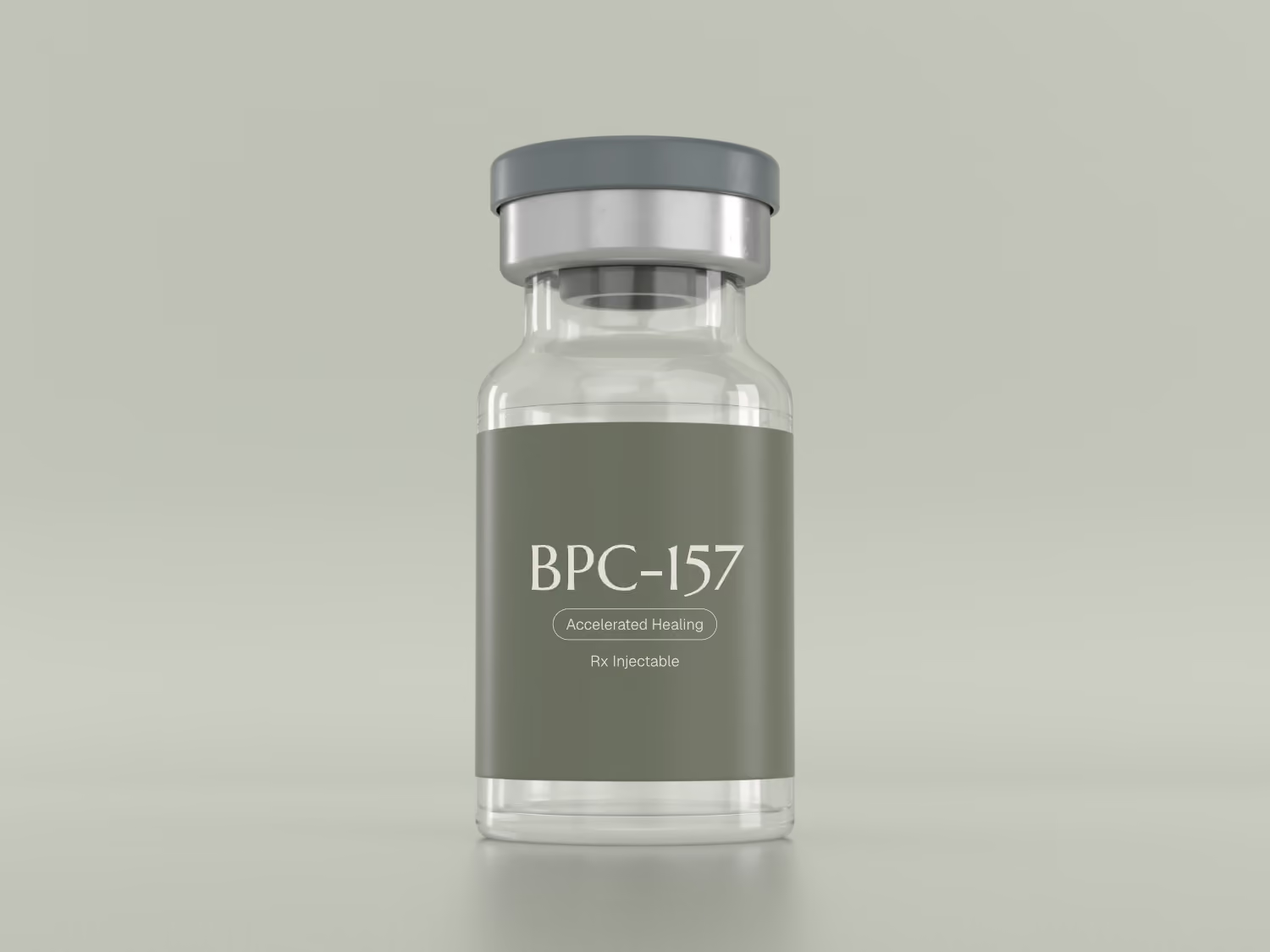
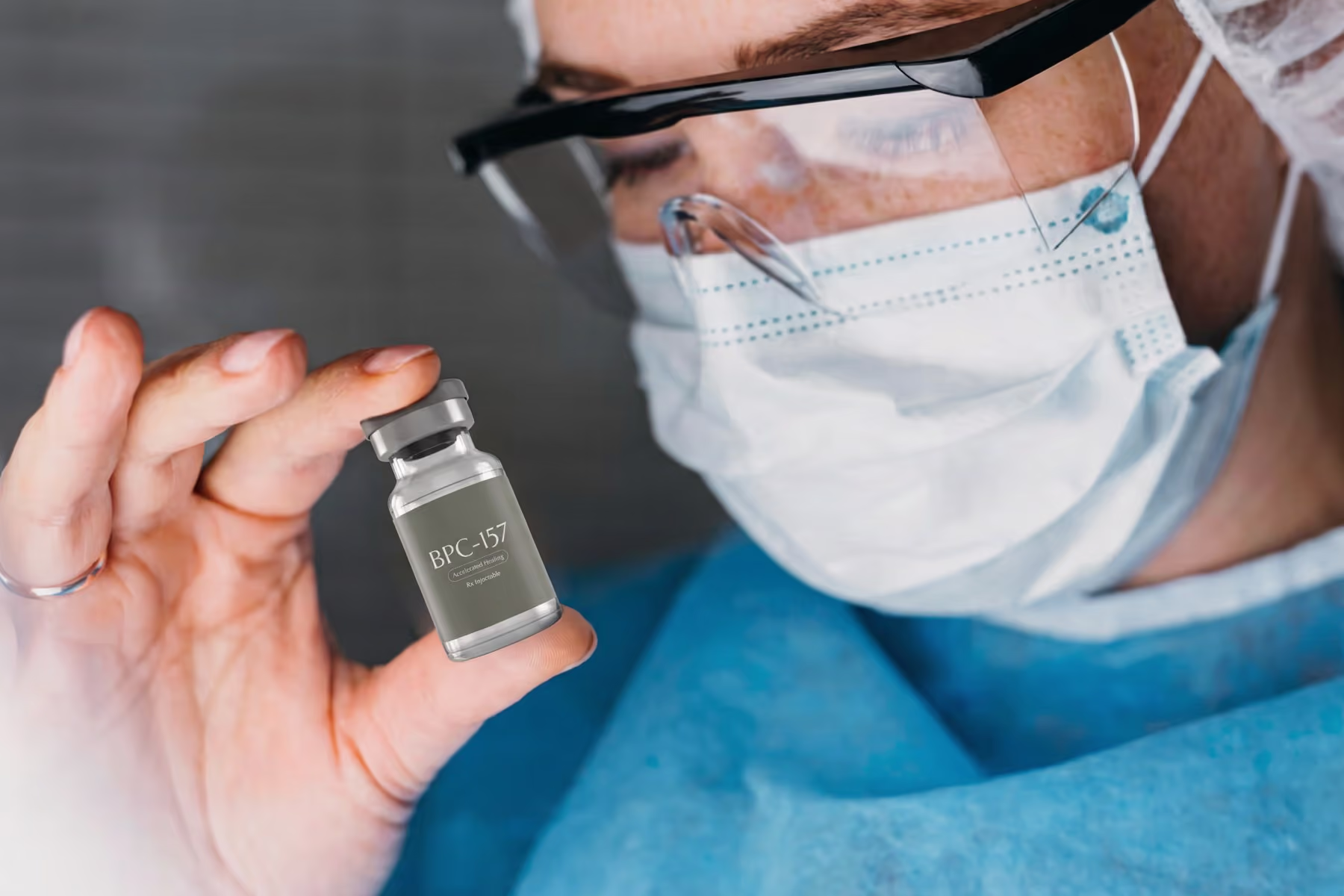
BPC-157 peptide therapy uses a lab-made peptide studied for its potential role in muscle, tendon, and gut repair, prescribed only when a licensed provider determines it is appropriate for you.
 Studied for tendon, ligament, and muscle repair
 Researched for its effects on inflammation
 Explored for gut lining and digestive support
 Investigated for healthy blood flow to tissues
* Price reflects the semi-annual plan. Monthly plan: $199.00/month. Quarterly plan: $179.10/month.
How It Works
BPC-157 peptide therapy is based on research suggesting the peptide may support the body's own repair processes. In laboratory and animal studies, BPC-157 has been observed to help grow new blood vessels in injured tissue, encourage the cells that rebuild tendons and ligaments to move into damaged areas, and calm inflammatory signaling. Most of this evidence comes from preclinical models, so researchers are still learning how well these effects carry over to people. Your provider can help you weigh what is known against your goals.
Discovery & Testing Background
BPC-157 was first described in the early 1990s by researchers in Croatia who were studying protective proteins in gastric juice. A pharmaceutical company later developed it as a candidate treatment for inflammatory bowel disease and ran early-stage trials, but it was never brought to market.
Since then, more than 100 animal and laboratory studies have explored its effects on tendons, ligaments, muscle, bone, and the digestive tract. Human research remains limited to a few small pilot studies, and large controlled clinical trials have not yet been completed.
What Is BPC-157?
BPC-157 is a lab-made peptide, a short chain of 15 amino acids. Its name stands for Body Protection Compound 157, and its sequence is based on part of a protein found naturally in the stomach.
BPC-157 is not an FDA-approved drug. It is available only as a compounded medication, prescribed by a licensed provider and prepared by a licensed 503A compounding pharmacy for an individual patient.
Key Takeaways

Studied for Tissue Repair

Researched for Gut Support

Early Human Safety Data

Physician-Guided Access
Safety & Side Effects
BPC-157 is not approved by the FDA. In October 2026, the U.S. Department of Health and Human Services issued an interim enforcement policy that sets specific quality and safety conditions for compounding BPC-157 while the FDA completes its formal review. This policy is not an FDA approval.
BPC-157 is prohibited at all times under World Anti-Doping Agency rules, so competitive athletes subject to drug testing should not use it. Pregnant or breastfeeding individuals should also avoid it. A licensed provider reviews your health history before any prescription is written, and you can reach a provider at any time with questions.
Quality & Specifications
The pharmacies AIRA works with are licensed in Texas and follow Texas State Board of Pharmacy rules for sterile compounding.

Molecular Profile
FORMULA
WEIGHT
CAS
SEQUENCE

Physical Properties
FORM
SOLUBILITY
STABILITY
STORAGE
See the Science
Safety of Intravenous Infusion of BPC157 in Humans: A Pilot Study2025 · Human pilot study
Intra-Articular Injection of BPC 157 for Multiple Types of Knee Pain2021 · Human retrospective study
Emerging Use of BPC-157 in Orthopaedic Sports Medicine: A Systematic Review2025 · Systematic review
Pharmacokinetics, Distribution, Metabolism, and Excretion of Body-Protective Compound 157 in Rats and Dogs2022 · Preclinical study
Why AIRA for BPC-157?
AIRA connects you with licensed providers who review your health history and goals before deciding whether BPC-157 is appropriate. If it is prescribed, your medication is prepared by an independent, state-licensed 503A compounding pharmacy and shipped discreetly to your door. You can message a provider at any time with questions and track your prescriptions and progress from one dashboard.

Chat with a provider 24/7

Trusted pharmacy

Manage goals in one place

Fast, discreet shipping
Explore BPC-157 with a licensed provider.
Complete a short online health questionnaire. A licensed provider will review it and determine whether BPC-157 is appropriate for you.
What our customers say about AIRA
Frequently asked questions
Is BPC-157 FDA-approved?
BPC-157 has not been approved by the U.S. Food and Drug Administration. It can only be prescribed through licensed clinicians where state law allows, and it is available only as a compounded medication prepared for an individual patient.
Has BPC-157 been studied in humans?
Yes, but only in a few small pilot studies, including a 2025 safety study of two healthy adults and a 2021 review of 16 patients. Most of what is known comes from animal and laboratory research, and large controlled human trials have not been completed.
What is BPC-157 being studied for?
BPC-157 is being studied for its potential role in tendon, ligament, muscle, and gut repair. In animal research, it has been observed to support blood vessel growth and calm inflammation in injured tissue. These findings have not yet been confirmed in large human trials.
What side effects have been reported with BPC-157?
Reported side effects have generally been mild, most often redness or discomfort at the injection site and occasionally nausea or dizziness. Because human research is limited, the full side effect profile is not yet known. Use should be guided by a licensed provider who can help monitor how you respond.
Who should avoid BPC-157?
Pregnant or breastfeeding individuals and competitive athletes subject to anti-doping rules should not use BPC-157. People with a history of cancer or other serious medical conditions should discuss it with their provider first.
How is BPC-157 administered?
AIRA's BPC-157 is prescribed as a subcutaneous injection, meaning a small injection just under the skin. Your provider and your pharmacy label will explain how to use it.
Do I need a prescription for BPC-157?
Yes. BPC-157 is available only with a prescription from a licensed provider, written for you as an individual patient.
How does AIRA's online process work?
You complete an online health questionnaire, and a licensed provider reviews it to decide whether treatment is appropriate. If your state requires a live consultation, one is arranged before any prescription is written. If approved, an independent 503A compounding pharmacy prepares your medication and ships it to you.
How is the quality of BPC-157 verified?
The active ingredient must come from an FDA-registered manufacturer and arrive with a certificate of analysis documenting its identity, purity, potency, and contaminant testing. The compounding pharmacy then prepares your medication under Texas State Board of Pharmacy sterile compounding rules.
Can BPC-157 peptide therapy be combined with other treatments?
Some patients use BPC-157 alongside other single-ingredient peptides, such as TB-500, with each prescribed separately. Whether combining treatments makes sense for you is a decision for your provider, based on your health history and goals.